
MUNICIPAL EMERGENCY COORDINATOR
FOUNDATION COURSES
PREPARED AND FACILITATED BY NAPIER CONSULTING
MAMEC’s MEC Foundation Courses offer a thorough overview of the responsibilities of an emergency coordinator, including how to plan for your unique community’s needs, operationalize local emergency response, and how to build skills and relationships to improve your community’s emergency response. Each module is taught by subject matter experts and guarantees specific knowledge outcomes that you can integrate into your work as an emergency practitioner.
Register now:
Participants who complete all 8 MEC Foundation Courses will receive a Municipal Emergency Coordinator certificate
This certificate represents a commitment by participants to an advanced level of education in emergency management and will enhance their individual emergency programs.
Why Earn Your Emergency Management Certification with MAMEC?
Emergency management professionals play a critical role in helping organizations prepare for, respond to, recover from, and mitigate emergencies and disasters. Earning your MEC certification through the MAMEC Training Program demonstrates a commitment to excellence while equipping you with practical skills that can be applied across municipal, Indigenous, public, private, and non-profit sectors.
Benefits of Certification:
Build Practical Expertise
Gain the knowledge and skills needed to effectively manage emergencies, disasters, and business disruptions using industry-recognized best practices.
Enhance Career Opportunities
Strengthen your professional credentials and increase your competitiveness for leadership and emergency management roles.
Increase Organizational Resilience
Learn how to develop and implement emergency management programs that protect people, operations, and critical infrastructure.
Improve Decision Making
Develop the confidence to assess risks, coordinate response efforts, and make informed decisions during complex incidents.
Demonstrate Professional Commitment
Certification signals to employers, colleagues, and stakeholders that you meet a recognized standard of competency and are committed to continuous professional development.
Expand Your Professional Network
Connect with emergency management professionals, share best practices, and build relationships that support collaboration during emergencies.
Stay Current with Best Practices in Emergency Management
Keep pace with evolving legislation, standards, and emerging threats through a foundation of lifelong learning.
Make a Meaningful Impact
Help build safer, more resilient communities by improving preparedness, response, recovery, and mitigation capabilities.
Invest in Your Future
By investing in your professional development today, you’ll be better prepared to protect your community when it matters most.
Course List
Module 1 – The Role of the Municipal Emergency Coordinator (MEC)
In this introductory course, participants will develop core knowledge on how to perform the role of a Municipal Emergency Coordinator (MEC) and how to implement and maintain a Municipal Emergency Management Program.
During this course, participants will learn:
- The role and responsibilities of a MEC;
- The importance of senior leadership support;
- Legislative and regulatory requirements;
- How to develop an effective emergency management program.

Module 2 – Hazard Identification Risk Assessment (HIRA): The Process and How to Use it as a Foundation for Plans
To prepare for emergencies, practitioners must first understand what hazards and risks exist in their community. In this course, participants will develop a core knowledge of how to develop a hazard and risk assessment (HIRA) for an Emergency Management Program in Manitoba.
During this course, participants will learn:
- The importance of having a HIRA;
- How to identify hazards, vulnerabilities, and risks;
- How to tailor the assessment to meet the needs of your community;
- How to incorporate the assessment into your Emergency Management Program.

Module 3 – How to Prepare a Community Emergency Plan that Meets Community Needs
Every emergency coordinator serves a unique community, with specific needs. This course will provide participants with the core knowledge to develop and maintain an emergency plan that considers and provides for the communities they serve.
During this course, participants will learn:
- The importance of having an emergency plan;
- The components of an emergency plan;
- How to tailor the plan to meet the needs of your community;
- How to incorporate the plan into your emergency management program.
Module 4 – Emergency Operations Centre (EOC) Management: Their Set-up, Communicating with your Team, and your Council
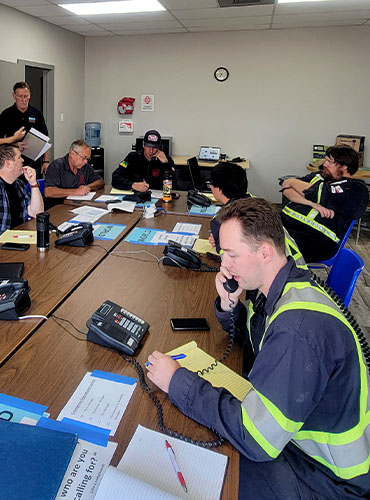
An Emergency Operations Centre (EOC) is the vital hub where vital operations, critical decisions, community coordination, and interorganizational collaboration occurs during an emergency. Learning how to effectively run an EOC can improve emergency response outcomes by properly managing resources, personnel, and time. This course will provide you with the core knowledge to select, resource, and maintain an EOC for your community.
During this course, participants will learn:
- The purpose of an EOC;
- The importance of designating and resourcing an EOC;
- How an EOC can be used to support your community’s response and recovery;
- Tips on tailoring an EOC to better meet the unique needs of your community.
Module 5 – Reception Centre Management
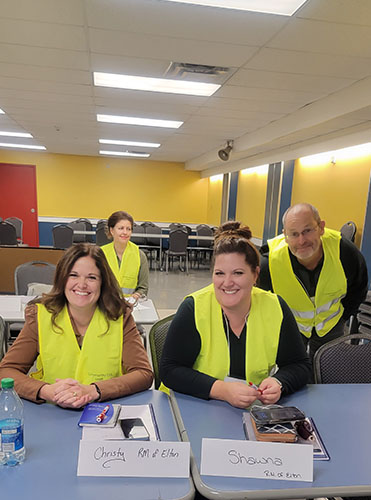
During an evacuation, a reception centre is one of the first places that community members will go to receive assistance in a time of uncertainty, stress, and fear. Learning how to effectively and intentionally set up your reception centre will allow your community to better support the evacuees needs while they are away from their homes.
During this course, participants will learn:
- The purpose of a Reception Centre;
- How to select and resource a Reception Centre;
- Job descriptions of the team;
- How to support and identify the needs of evacuees.

Module 6 – Volunteers: How to Find Them, How to Train Them, How to Keep Them
Every emergency practitioner knows that volunteers are essential to getting the work done, especially during active emergency response. However, it is critical to know how to organize, utilize, and manage volunteers in order for that work to be done effectively. This course will cover the potential benefits and challenges of managing volunteers during emergencies, including how volunteers can help support your emergency management program before, during, and after an emergency.
During this course, participants will learn:
- How to plan for spontaneous volunteers;
- The benefits of affiliated volunteers;
- Volunteer management best practices (including how to recruit, safely and effectively train, deploy, and retain volunteers).

Module 7 – Understanding Trauma & Grief: A Community Response Through Care and Connection
All emergencies can have long-lasting impacts on the psychological wellbeing of community members. Being able to support the psychosocial needs of your community by understanding trauma and grief, and creating spaces where individuals feel seen, heard, and connected will help to build trust, strengthen relationships, and support community recovery. This course will cover how trauma affects communities after disasters, violence, or sudden loss; how to emotionally and psychologically support communities post-disaster; and how to advocate for personal mental health skills development for emergency professionals and support teams. This training is well suited for community members, volunteers, faith groups, educators, neighbourhood organizations, and frontline staff who are not mental health professionals but want to respond in informed, compassionate, and supportive ways.
During this course, participants will learn:
- How to define trauma and grief and recognize its effect on individuals, families and communities;
- How to identify common signs of trauma and grief–respecting that every person’s experience is different;
- The importance of culture, identity, history, relationships, and community in healing;
- When to encourage someone to seek additional support;
- How to utilize community resources and peer support;
- How to develop skills for active listening and identifying emotional safety;
- How to develop healthy boundaries, self-care skills, and recognize compassion fatigue.

Module 8 – Exercise Design
Engaging in emergency exercises (or “tabletop” exercises) allows emergency practitioners to consider specific risks (tornadoes, floods, wildfires, etc.), identify problems, and work towards solutions in a low-stakes, collaborative setting–enabling emergency practitioners and their colleagues to build invaluable knowledge, skills, and relationships that can be utilized during an active emergency. This course will provide participants with a thorough overview of the context, concepts, and processes related to the design, and delivery of community emergency management exercises.
During this course, participants will learn:
- The different types of exercises;
- The necessary steps to designing, delivering, and evaluating exercises;
- How to develop and manage a multi-year exercise program.
Register Now
Know what course you’d like to sign up for? Fill out the form by clicking the arrow below and submit payment to complete your registration.